
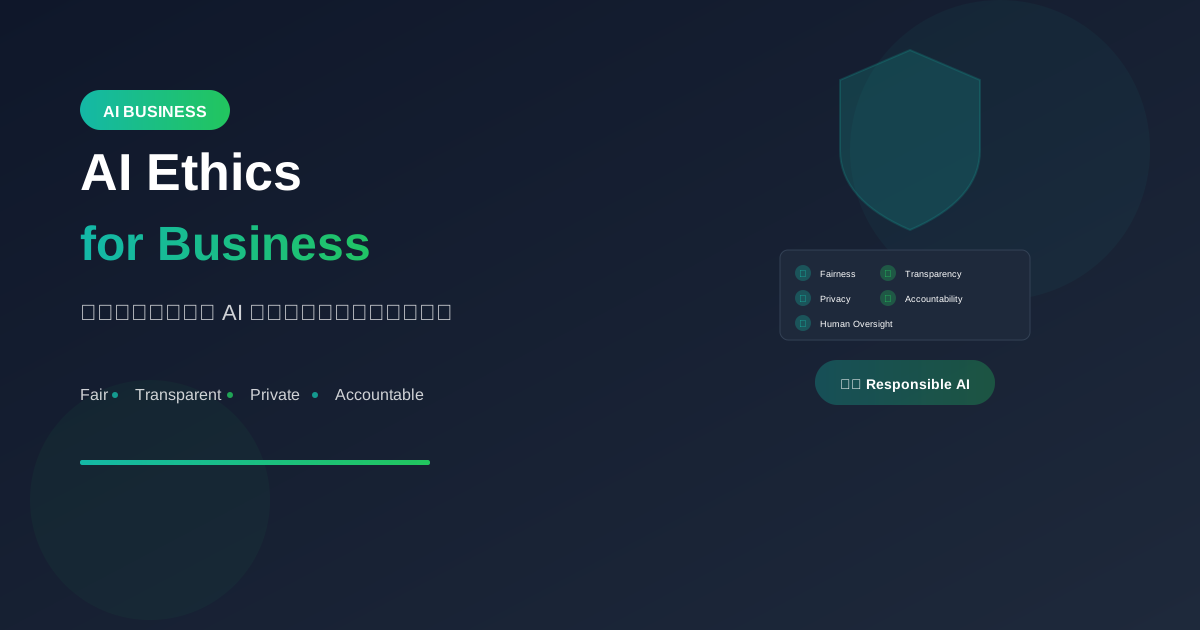
การใช้ AI อย่างมีจริยธรรมเป็นทั้งหน้าที่และข้อได้เปรียบทางธุรกิจ
ทำไม AI Ethics สำคัญ?
ความเสี่ยงจากการใช้ AI ผิดจริยธรรม
Business Risks:
┌─────────────────────────────────────────────────────────────┐
│ Reputational Damage                                         │
│ ├─ Customer trust loss                                      │
│ ├─ Brand damage                                             │
│ └─ Social media backlash                                    │
│                                                             │
│ Legal & Regulatory                                          │
│ ├─ GDPR/PDPA violations                                     │
│ ├─ Discrimination lawsuits                                  │
│ └─ Regulatory fines                                         │
│                                                             │
│ Operational                                                 │
│ ├─ Biased decisions at scale                                │
│ ├─ Employee distrust                                        │
│ └─ Unfair outcomes                                          │
│                                                             │
│ Financial                                                   │
│ ├─ Lawsuit costs                                            │
│ ├─ Lost business                                            │
│ └─ Remediation expenses                                     │
└─────────────────────────────────────────────────────────────┘
Case Studies ที่ต้องเรียนรู้
Notable AI Ethics Failures:

1. Amazon Recruiting AI (2018)
   - AI biased against women
   - Trained on historical data
   - Had to be scrapped

2. Healthcare Algorithm (2019)
   - Racial bias in patient prioritization
   - Affected millions of patients
   - Required complete overhaul

3. Facial Recognition (Multiple)
   - Higher error rates for minorities
   - Led to wrongful arrests
   - Banned in several jurisdictions
Core AI Ethics Principles
1. Fairness & Non-Discrimination
Fairness Principle:
┌─────────────────────────────────────────────────────────────┐
│ AI systems should treat all individuals and groups fairly,  │
│ without unjust bias or discrimination.                      │
│                                                             │
│ Protected Characteristics:                                  │
│ • Race/Ethnicity                                            │
│ • Gender                                                    │
│ • Age                                                       │
│ • Religion                                                  │
│ • Disability                                                │
│ • Sexual orientation                                        │
│ • Socioeconomic status                                      │
│                                                             │
│ Implementation:                                              │
│ □ Test for bias across groups                               │
│ □ Use diverse training data                                 │
│ □ Regular audits                                            │
│ □ Clear appeal process                                      │
└─────────────────────────────────────────────────────────────┘
2. Transparency & Explainability
Transparency Principle:
┌─────────────────────────────────────────────────────────────┐
│ People should understand when AI is being used and how      │
│ decisions affecting them are made.                          │
│                                                             │
│ Requirements:                                               │
│                                                             │
│ Disclosure:                                                 │
│ □ Clearly label AI-generated content                        │
│ □ Inform users when interacting with AI                     │
│ □ Explain data collection and use                           │
│                                                             │
│ Explainability:                                             │
│ □ Provide reasons for AI decisions                          │
│ □ Make logic understandable                                 │
│ □ Allow users to ask "why?"                                 │
│                                                             │
│ Documentation:                                              │
│ □ Document AI system capabilities                           │
│ □ Record limitations and risks                              │
│ □ Maintain audit trails                                     │
└─────────────────────────────────────────────────────────────┘
3. Privacy & Data Protection
Privacy Principle:
┌─────────────────────────────────────────────────────────────┐
│ Personal data used in AI systems must be collected,         │
│ stored, and processed responsibly.                          │
│                                                             │
│ Data Lifecycle:                                             │
│                                                             │
│ Collection:                                                 │
│ □ Collect only necessary data                               │
│ □ Obtain proper consent                                     │
│ □ Be transparent about use                                  │
│                                                             │
│ Processing:                                                 │
│ □ Anonymize where possible                                  │
│ □ Secure data handling                                      │
│ □ Limit access                                              │
│                                                             │
│ Retention:                                                  │
│ □ Clear retention policies                                  │
│ □ Delete when no longer needed                              │
│ □ Honor deletion requests                                   │
└─────────────────────────────────────────────────────────────┘
4. Human Oversight
Human Oversight Principle:
┌─────────────────────────────────────────────────────────────┐
│ Humans should maintain meaningful control over AI systems,  │
│ especially for high-stakes decisions.                       │
│                                                             │
│ Levels of Autonomy:                                         │
│                                                             │
│ Human-in-the-loop:                                          │
│ AI recommends → Human decides                               │
│ Use for: High-stakes decisions                              │
│                                                             │
│ Human-on-the-loop:                                          │
│ AI decides → Human monitors/overrides                       │
│ Use for: Medium-stakes, high-volume                         │
│                                                             │
│ Human-out-of-the-loop:                                      │
│ AI decides autonomously                                     │
│ Use for: Low-stakes, well-tested                            │
│                                                             │
│ Always ensure:                                              │
│ □ Override capability                                       │
│ □ Emergency stop                                            │
│ □ Escalation process                                        │
└─────────────────────────────────────────────────────────────┘
5. Accountability
Accountability Principle:
┌─────────────────────────────────────────────────────────────┐
│ Clear responsibility for AI systems and their outcomes.     │
│                                                             │
│ Who is Accountable?                                         │
│                                                             │
│ Executive Leadership:                                       │
│ • Overall AI strategy                                       │
│ • Risk tolerance                                            │
│ • Resource allocation                                       │
│                                                             │
│ AI/Tech Teams:                                              │
│ • System design and implementation                          │
│ • Technical safeguards                                      │
│ • Testing and validation                                    │
│                                                             │
│ Business Units:                                             │
│ • Use case decisions                                        │
│ • Monitoring outcomes                                       │
│ • User training                                             │
│                                                             │
│ Documentation Required:                                     │
│ □ Decision-making processes                                 │
│ □ Risk assessments                                          │
│ □ Incident responses                                        │
│ □ Audit trails                                              │
└─────────────────────────────────────────────────────────────┘
AI Governance Framework
Structure
AI Governance Model:
┌─────────────────────────────────────────────────────────────┐
│                      Board of Directors                     │
│                            │                                │
│                    AI Steering Committee                    │
│                    (Executive Oversight)                    │
│                            │                                │
│        ┌───────────────────┼───────────────────┐           │
│        │                   │                   │           │
│   AI Ethics         AI Center of         Chief AI          │
│   Committee         Excellence           Officer           │
│   (Review &         (Standards &         (Strategy &       │
│   Guidance)         Best Practices)      Operations)       │
│        │                   │                   │           │
│        └───────────────────┼───────────────────┘           │
│                            │                                │
│                    Business Units                           │
│                 (AI Implementation)                         │
└─────────────────────────────────────────────────────────────┘
AI Ethics Committee
Ethics Committee Responsibilities:
┌─────────────────────────────────────────────────────────────┐
│ Review:                                                     │
│ ├─ New AI use cases before deployment                       │
│ ├─ High-risk AI applications                                │
│ ├─ Ethics concerns raised                                   │
│ └─ Third-party AI vendors                                   │
│                                                             │
│ Advise:                                                     │
│ ├─ Policy development                                       │
│ ├─ Training content                                         │
│ ├─ Incident response                                        │
│ └─ Industry best practices                                  │
│                                                             │
│ Members:                                                    │
│ ├─ Legal/Compliance                                         │
│ ├─ HR/Employee representative                               │
│ ├─ Technical AI expert                                      │
│ ├─ Business unit representative                             │
│ └─ External ethics advisor (optional)                       │
│                                                             │
│ Meeting Frequency: Monthly + As needed                      │
└─────────────────────────────────────────────────────────────┘
AI Ethics Assessment
class AIEthicsAssessment:
    def assess_use_case(self, use_case):
        assessment = {
            "risk_level": self._calculate_risk(use_case),
            "fairness": self._assess_fairness(use_case),
            "transparency": self._assess_transparency(use_case),
            "privacy": self._assess_privacy(use_case),
            "human_oversight": self._assess_oversight(use_case),
            "accountability": self._assess_accountability(use_case)
        }

        assessment["overall_score"] = self._calculate_score(assessment)
        assessment["recommendation"] = self._get_recommendation(assessment)

        return assessment

    def _calculate_risk(self, use_case):
        factors = {
            "decision_impact": use_case.affects_individuals * 2,
            "scale": use_case.number_affected / 1000,
            "reversibility": 10 if use_case.reversible else 0,
            "domain_sensitivity": self._domain_risk(use_case.domain)
        }

        risk_score = sum(factors.values()) / len(factors)

        if risk_score > 7:
            return "HIGH"
        elif risk_score > 4:
            return "MEDIUM"
        return "LOW"
Policies to Implement
Essential AI Policies:

1. AI Acceptable Use Policy
   ├─ Approved use cases
   ├─ Prohibited uses
   ├─ Data handling requirements
   ├─ Quality standards
   └─ Reporting requirements

2. AI Vendor Policy
   ├─ Evaluation criteria
   ├─ Ethics requirements
   ├─ Data handling clauses
   ├─ Audit rights
   └─ Liability provisions

3. AI Incident Response Policy
   ├─ Definition of incident
   ├─ Reporting process
   ├─ Investigation procedure
   ├─ Remediation steps
   └─ Communication plan

4. AI Training Policy
   ├─ Required training by role
   ├─ Ethics training requirements
   ├─ Certification requirements
   └─ Refresher schedules
Practical Implementation
Bias Testing
def test_for_bias(model, test_data, protected_attributes):
    """
    Test AI model for bias across protected groups
    """
    results = {}

    for attribute in protected_attributes:
        groups = test_data[attribute].unique()

        group_results = {}
        for group in groups:
            group_data = test_data[test_data[attribute] == group]
            predictions = model.predict(group_data)

            group_results[group] = {
                "positive_rate": predictions.mean(),
                "accuracy": calculate_accuracy(predictions, group_data['label']),
                "false_positive_rate": calculate_fpr(predictions, group_data['label']),
                "false_negative_rate": calculate_fnr(predictions, group_data['label'])
            }

        # Calculate disparities
        results[attribute] = {
            "group_results": group_results,
            "statistical_parity": calculate_parity(group_results),
            "equal_opportunity": calculate_equal_opportunity(group_results),
            "disparate_impact": calculate_disparate_impact(group_results)
        }

    return results
Transparency Checklist
Before Deploying AI:

User Communication:
□ Users informed AI is being used
□ Clear explanation of AI's role
□ Opt-out available where appropriate
□ Contact for questions/complaints

Documentation:
□ System capabilities documented
□ Limitations clearly stated
□ Training data described
□ Performance metrics shared

Explainability:
□ Decisions can be explained
□ Explanation suitable for audience
□ Appeal process defined
□ Human review available
Privacy Impact Assessment
AI Privacy Checklist:

Data Collection:
□ What personal data is collected?
□ Is all data necessary?
□ How is consent obtained?
□ Is notice provided?

Data Use:
□ Is data used only for stated purposes?
□ Are there data minimization measures?
□ Is data anonymized/pseudonymized?
□ Who has access?

Data Storage:
□ Where is data stored?
□ How is it secured?
□ What is retention period?
□ How is it deleted?

Third Parties:
□ Is data shared with third parties?
□ Are there proper agreements?
□ Do they meet our standards?
□ Can we audit them?
สรุป
AI Ethics Principles:
- Fairness: ไม่เลือกปฏิบัติ
- Transparency: เปิดเผยและอธิบายได้
- Privacy: ปกป้องข้อมูลส่วนบุคคล
- Human Oversight: มีคนควบคุม
- Accountability: รับผิดชอบได้
Implementation Steps:
- Establish governance structure
- Create ethics committee
- Develop policies
- Implement safeguards
- Monitor and audit
Business Benefits:
- Build customer trust
- Reduce legal risk
- Attract talent
- Sustainable AI adoption
- Competitive advantage
อ่านเพิ่มเติม:
เขียนโดย
AI Unlocked Team
สถาบันสอน AI และ Vibe Coding — เชียงใหม่และออนไลน์
AI Unlocked สอน AI และ Vibe Coding มากว่า 15 ปี ผู้เรียนกว่า 1,500 คน โฟกัสลงมือทำจริงด้วย Claude Code, n8n และ AI Agent
บทความในหัวข้อเดียวกัน
เรียน AI 2026 — Complete Roadmap จากศูนย์ถึงโปร
เรียน AI ปี 2026 ไม่รู้จะเริ่มต้นยังไง? อ่าน Roadmap ฉบับสมบูรณ์นี้ ครบทุก Stage พร้อม Track ตามอาชีพ เริ่มได้เลยวันนี้
28/05/2569

เรียน AI ใน 30 วัน — Plan สำหรับคนงานยุ่ง
เรียน AI 30 วัน ได้จริงไหม? Plan วันละ 1 ชม. สำหรับคนทำงานยุ่ง ตั้งแต่ Foundation ถึง Portfolio — เริ่มต้นได้เลยวันนี้ ดู Pricing
14/08/2569

เรียน AI แล้วเปลี่ยนสายงานได้จริงไหม — Real Case Thai
เรียน AI เปลี่ยนสายงานได้จริงในไทยปี 2026 — 4 case จริง timeline realistic และขั้นตอนที่ทำได้เลย เริ่มต้นที่ AI Unlocked
03/08/2569