
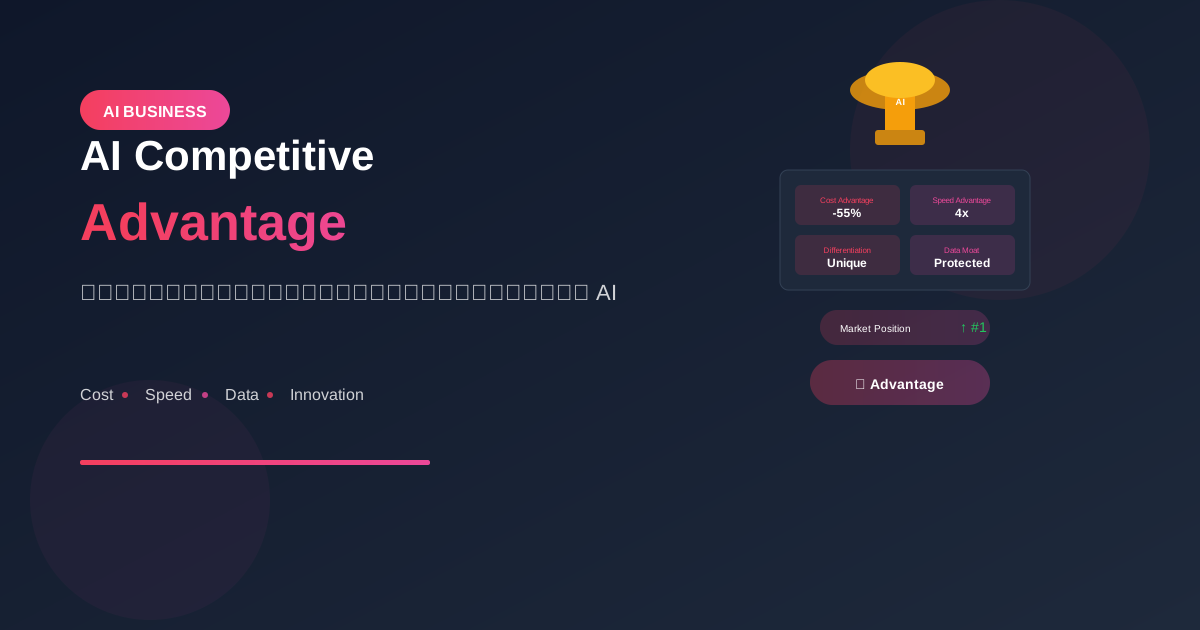
AI ไม่ใช่แค่ tool แต่เป็น strategic asset ที่สร้างความได้เปรียบอย่างยั่งยืน
AI as a Competitive Weapon
The AI Adoption Gap
AI Adoption by Company Performance:

Top Performers (20%):
├─ 80% have AI strategy
├─ 3+ AI use cases deployed
├─ 25%+ revenue from AI-enhanced products
└─ AI integrated into core operations

Average Performers (60%):
├─ 40% have AI strategy
├─ 1-2 AI pilots
├─ 5-10% revenue AI-enhanced
└─ AI in isolated experiments

Laggards (20%):
├─ 10% have AI strategy
├─ No significant AI deployment
├─ 0% revenue AI-enhanced
└─ AI not on roadmap

Gap widening each year ─────────────►
Types of AI Competitive Advantage
AI Advantage Framework:
┌─────────────────────────────────────────────────────────────┐
│                                                             │
│  1. COST ADVANTAGE                                          │
│     └─ Do more with less                                    │
│        • Automation                                         │
│        • Efficiency gains                                   │
│        • Scale without proportional cost                    │
│                                                             │
│  2. DIFFERENTIATION                                         │
│     └─ Offer something unique                               │
│        • Superior customer experience                       │
│        • AI-powered products                                │
│        • Personalization at scale                           │
│                                                             │
│  3. SPEED ADVANTAGE                                         │
│     └─ Move faster than competition                         │
│        • Faster decisions                                   │
│        • Rapid iteration                                    │
│        • Real-time adaptation                               │
│                                                             │
│  4. DATA ADVANTAGE                                          │
│     └─ Know more than competition                           │
│        • Better insights                                    │
│        • Predictive capabilities                            │
│        • Proprietary models                                 │
│                                                             │
└─────────────────────────────────────────────────────────────┘
1. Cost Advantage Through AI
Operational Efficiency
AI Cost Reduction Opportunities:

Customer Support:
Before: 50 agents × $40,000/year = $2M
After AI: 20 agents + AI = $900K
Savings: 55%

Content Creation:
Before: 5 writers × $60,000 = $300K
After AI: 2 writers + AI = $140K
Savings: 53%

Data Entry:
Before: 10 staff × $35,000 = $350K
After AI: 2 staff + AI = $90K
Savings: 74%

Quality Assurance:
Before: 8 QA × $50,000 = $400K
After AI: 3 QA + AI = $180K
Savings: 55%
Scale Economies
def calculate_ai_scale_advantage(company):
    """
    AI enables non-linear scaling
    """
    traditional_model = {
        "customers": company.customers,
        "support_staff": company.customers / 500,  # 1:500 ratio
        "cost_per_customer": 50  # Annual support cost
    }

    ai_model = {
        "customers": company.customers,
        "support_staff": company.customers / 2000,  # 1:2000 ratio
        "ai_cost": 10000,  # Fixed AI cost
        "cost_per_customer": 15 + (10000 / company.customers)
    }

    return {
        "traditional_total_cost": traditional_model["cost_per_customer"] * company.customers,
        "ai_total_cost": ai_model["cost_per_customer"] * company.customers,
        "savings_percentage": (1 - ai_model["cost_per_customer"] / traditional_model["cost_per_customer"]) * 100,
        "breakeven_customers": 10000 / (50 - 15)  # Where AI becomes cheaper
    }
2. Differentiation Through AI
Superior Customer Experience
AI-Powered CX Advantages:

Personalization:
┌─────────────────────────────────────────┐
│ Traditional: Same experience for all    │
│ With AI: Unique experience per customer │
│                                         │
│ • Personalized recommendations          │
│ • Custom pricing/offers                 │
│ • Tailored communication               │
│ • Adaptive interfaces                   │
└─────────────────────────────────────────┘

Response Time:
┌─────────────────────────────────────────┐
│ Traditional: 4-24 hour response         │
│ With AI: Instant 24/7 response          │
│                                         │
│ Impact: 4.5x higher satisfaction        │
│         3x higher retention             │
└─────────────────────────────────────────┘

Proactive Service:
┌─────────────────────────────────────────┐
│ Traditional: React to problems          │
│ With AI: Predict and prevent            │
│                                         │
│ • Churn prediction → Retention action   │
│ • Issue detection → Proactive outreach  │
│ • Need anticipation → Timely offers     │
└─────────────────────────────────────────┘
AI-Enhanced Products
Product AI Enhancement Examples:

Software Products:
├─ Smart features (auto-complete, suggestions)
├─ Intelligent search
├─ Automated insights
└─ Natural language interfaces

Physical Products:
├─ Predictive maintenance
├─ Usage optimization
├─ Personalized settings
└─ Voice control

Services:
├─ AI-powered recommendations
├─ Automated customization
├─ Intelligent scheduling
└─ Real-time optimization
3. Speed Advantage Through AI
Faster Decision Making
Decision Speed Comparison:

Pricing Decisions:
Traditional: Weekly price reviews
With AI: Real-time dynamic pricing
Advantage: 168x faster

Marketing Campaign:
Traditional: 2-week launch cycle
With AI: Same-day optimization
Advantage: 14x faster

Customer Insights:
Traditional: Monthly reports
With AI: Real-time dashboards
Advantage: 30x faster

Product Iteration:
Traditional: Quarterly releases
With AI: Continuous deployment
Advantage: 12x faster
Rapid Experimentation
class AIAcceleratedExperimentation:
    def run_ab_test(self, variants, duration_days=7):
        """
        AI accelerates experiment velocity
        """
        traditional_approach = {
            "setup_time": 5,  # days
            "run_time": duration_days,
            "analysis_time": 3,  # days
            "total_time": 5 + duration_days + 3
        }

        ai_approach = {
            "setup_time": 0.5,  # days - AI generates variants
            "run_time": duration_days * 0.5,  # Smart early stopping
            "analysis_time": 0.1,  # days - Instant AI analysis
            "total_time": 0.5 + (duration_days * 0.5) + 0.1
        }

        return {
            "time_saved": traditional_approach["total_time"] - ai_approach["total_time"],
            "experiments_per_month_traditional": 30 / traditional_approach["total_time"],
            "experiments_per_month_ai": 30 / ai_approach["total_time"],
            "velocity_increase": traditional_approach["total_time"] / ai_approach["total_time"]
        }

# Result: 3-4x more experiments per month
4. Data Advantage Through AI
Building Proprietary AI Assets
Data Flywheel Effect:
┌─────────────────────────────────────────────────────────────┐
│                                                             │
│      ┌──────────────┐                                       │
│      │  More Users  │                                       │
│      └──────┬───────┘                                       │
│             │                                               │
│             ▼                                               │
│      ┌──────────────┐                                       │
│      │  More Data   │                                       │
│      └──────┬───────┘                                       │
│             │                                               │
│             ▼                                               │
│      ┌──────────────┐                                       │
│      │ Better AI    │                                       │
│      └──────┬───────┘                                       │
│             │                                               │
│             ▼                                               │
│      ┌──────────────┐                                       │
│      │Better Product│──────────┐                            │
│      └──────────────┘          │                            │
│                                │                            │
│             ┌──────────────────┘                            │
│             │                                               │
│             ▼                                               │
│      ┌──────────────┐                                       │
│      │  More Users  │  ← Cycle continues                   │
│      └──────────────┘                                       │
│                                                             │
│  Competitors can't easily replicate your data advantage     │
│                                                             │
└─────────────────────────────────────────────────────────────┘
Unique AI Capabilities
Building Defensible AI:

1. Domain-Specific Models
   └─ Train on your unique data
   └─ Competitors can't replicate

2. Customer Behavior Models
   └─ Predict your customers' needs
   └─ Years of historical data

3. Operational Intelligence
   └─ Learn from your processes
   └─ Optimize for your context

4. Knowledge Graphs
   └─ Your products, customers, relationships
   └─ Proprietary intelligence layer
Strategic AI Implementation
AI Strategy Canvas
Strategic AI Questions:

Where to Compete:
□ Which customer segments benefit most from AI?
□ Which products/services can AI enhance?
□ Which markets have AI-ready customers?

How to Win:
□ What unique data assets do we have?
□ What AI capabilities are hardest to copy?
□ How does AI amplify our existing strengths?

What Capabilities Needed:
□ What AI talent do we need?
□ What technology infrastructure?
□ What data must we collect?

How to Sustain:
□ How do we maintain AI advantage?
□ What's our learning rate vs competitors?
□ How do we build switching costs?
Competitive Positioning
AI Positioning Options:

1. AI Leader
   ├─ First to market with AI
   ├─ Heavy investment
   ├─ Brand as AI innovator
   └─ Risk: High cost, uncertain return

2. Fast Follower
   ├─ Watch leaders, adopt proven AI
   ├─ Lower risk
   ├─ Learn from others' mistakes
   └─ Risk: Always behind

3. AI Niche
   ├─ AI excellence in specific area
   ├─ Deep expertise
   ├─ Hard to replicate
   └─ Risk: Limited market

4. AI-Enabled
   ├─ AI as tool, not differentiator
   ├─ Focus on execution
   ├─ Use standard AI tools
   └─ Risk: No AI moat
Monitoring Competitive Position
class AICompetitiveMonitor:
    def assess_position(self):
        metrics = {
            "ai_capabilities": {
                "use_cases_deployed": self.count_ai_use_cases(),
                "ai_talent_ratio": self.ai_employees / self.total_employees,
                "ai_investment_percent": self.ai_budget / self.total_budget,
                "data_assets_score": self.evaluate_data_assets()
            },

            "vs_competitors": {
                "capability_gap": self.compare_capabilities(),
                "speed_advantage": self.compare_iteration_speed(),
                "cost_advantage": self.compare_unit_economics()
            },

            "customer_impact": {
                "ai_nps_lift": self.nps_with_ai - self.nps_baseline,
                "ai_revenue_percent": self.ai_revenue / self.total_revenue,
                "retention_improvement": self.ai_retention_impact()
            }
        }

        return metrics
Building Sustainable Advantage
AI Moat Strategies
Creating Defensible AI Advantage:

1. Data Moats
   ├─ Unique data sources
   ├─ Network effects
   ├─ Long collection history
   └─ Hard for competitors to replicate

2. Model Moats
   ├─ Custom-trained models
   ├─ Domain expertise embedded
   ├─ Continuous improvement
   └─ IP protection

3. Integration Moats
   ├─ Deep workflow integration
   ├─ High switching costs
   ├─ Customer lock-in
   └─ Ecosystem effects

4. Talent Moats
   ├─ Top AI talent
   ├─ Domain + AI expertise
   ├─ Culture of innovation
   └─ Learning organization
Continuous AI Innovation
Innovation Pipeline:

Near-term (0-6 months):
├─ Optimize existing AI
├─ Expand use cases
├─ Improve user adoption
└─ Quick wins

Medium-term (6-18 months):
├─ New AI products/features
├─ Advanced capabilities
├─ Data platform enhancement
└─ Competitive parity gaps

Long-term (18+ months):
├─ Breakthrough innovations
├─ New business models
├─ Strategic acquisitions
└─ Market-creating AI
Action Plan
90-Day AI Competitive Sprint
Month 1: Assess
Week 1-2: Competitive analysis
├─ Audit competitor AI capabilities
├─ Identify gaps and opportunities
├─ Benchmark your AI maturity
└─ Prioritize opportunities

Week 3-4: Strategy formation
├─ Define AI vision
├─ Select strategic focus areas
├─ Identify quick wins
└─ Resource planning

Month 2: Act
Week 5-8: Quick wins
├─ Deploy 2-3 AI use cases
├─ Demonstrate value
├─ Build momentum
└─ Learn and iterate

Month 3: Accelerate
Week 9-12: Scale
├─ Expand successful pilots
├─ Build AI capabilities
├─ Launch customer-facing AI
└─ Measure competitive impact
สรุป
AI Competitive Advantage Types:
- Cost: Do more with less
- Differentiation: Offer unique value
- Speed: Move faster
- Data: Know more
Building Sustainable Advantage:
- Develop unique data assets
- Build proprietary AI models
- Create deep integrations
- Attract top talent
- Continuous innovation
Key Success Factors:
- Clear AI strategy
- Executive commitment
- Talent investment
- Customer focus
- Rapid iteration
อ่านเพิ่มเติม:
เขียนโดย
AI Unlocked Team
สถาบันสอน AI และ Vibe Coding — เชียงใหม่และออนไลน์
AI Unlocked สอน AI และ Vibe Coding มากว่า 15 ปี ผู้เรียนกว่า 1,500 คน โฟกัสลงมือทำจริงด้วย Claude Code, n8n และ AI Agent
บทความในหัวข้อเดียวกัน
เรียน AI 2026 — Complete Roadmap จากศูนย์ถึงโปร
เรียน AI ปี 2026 ไม่รู้จะเริ่มต้นยังไง? อ่าน Roadmap ฉบับสมบูรณ์นี้ ครบทุก Stage พร้อม Track ตามอาชีพ เริ่มได้เลยวันนี้
28/05/2569

เรียน AI ใน 30 วัน — Plan สำหรับคนงานยุ่ง
เรียน AI 30 วัน ได้จริงไหม? Plan วันละ 1 ชม. สำหรับคนทำงานยุ่ง ตั้งแต่ Foundation ถึง Portfolio — เริ่มต้นได้เลยวันนี้ ดู Pricing
14/08/2569

เรียน AI แล้วเปลี่ยนสายงานได้จริงไหม — Real Case Thai
เรียน AI เปลี่ยนสายงานได้จริงในไทยปี 2026 — 4 case จริง timeline realistic และขั้นตอนที่ทำได้เลย เริ่มต้นที่ AI Unlocked
03/08/2569