
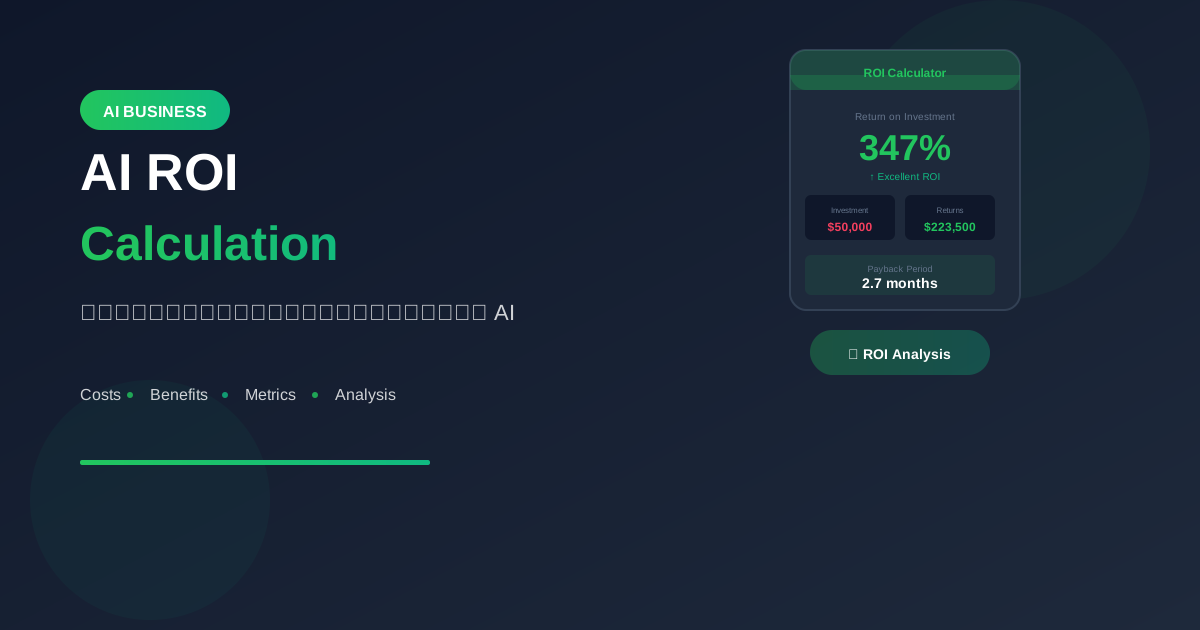
การลงทุนใน AI ต้องวัดผลได้ บทความนี้จะสอนวิธีคำนวณ ROI อย่างเป็นระบบ
ทำไมต้องคำนวณ AI ROI?
ปัญหาที่พบบ่อย
Common AI Investment Mistakes:
❌ ลงทุนโดยไม่มี baseline metrics
❌ ไม่กำหนด success criteria
❌ วัดผลผิด metrics
❌ คาดหวังผลลัพธ์เร็วเกินไป
❌ ไม่รวมต้นทุนซ่อนเร้น
Benefits ของการวัด ROI
Why Measure AI ROI:
✅ Justify investment to stakeholders
✅ Compare AI vs other options
✅ Prioritize AI projects
✅ Set realistic expectations
✅ Continuous improvement
AI Investment Components
Total Cost of AI Implementation
Initial Costs (One-time):
┌─────────────────────────────────────┐
│ Technology                          │
│ - API credits/licenses: $5,000-50,000│
│ - Infrastructure: $10,000-100,000   │
│ - Integration: $20,000-200,000      │
│                                     │
│ People                              │
│ - Training: $5,000-20,000           │
│ - Consulting: $10,000-100,000       │
│ - Hiring: $50,000-150,000           │
│                                     │
│ Process                             │
│ - Change management: $5,000-30,000  │
│ - Testing/QA: $5,000-25,000         │
└─────────────────────────────────────┘

Ongoing Costs (Monthly/Annual):
┌─────────────────────────────────────┐
│ - API usage: $500-10,000/month      │
│ - Maintenance: $1,000-5,000/month   │
│ - Updates/improvements: $2,000-10,000/month│
│ - Training (new staff): $500-2,000/month│
└─────────────────────────────────────┘
Cost Categories
def calculate_total_ai_cost(params):
    # Initial costs
    initial_costs = {
        "api_setup": params['api_license'],
        "infrastructure": params['infrastructure'],
        "integration": params['integration_dev'],
        "training": params['staff_training'],
        "consulting": params['external_help'],
        "change_management": params['change_mgmt']
    }

    # Ongoing costs (annual)
    annual_costs = {
        "api_usage": params['monthly_api'] * 12,
        "maintenance": params['monthly_maintenance'] * 12,
        "staff_time": params['hours_per_month'] * 12 * params['hourly_rate'],
        "updates": params['annual_updates']
    }

    # Hidden costs
    hidden_costs = {
        "opportunity_cost": params['opportunity_cost'],
        "learning_curve": params['productivity_loss'] * params['months_to_proficiency'],
        "error_handling": params['error_rate'] * params['error_cost']
    }

    return {
        "initial": sum(initial_costs.values()),
        "annual": sum(annual_costs.values()),
        "hidden": sum(hidden_costs.values()),
        "total_year_1": sum(initial_costs.values()) + sum(annual_costs.values()) + sum(hidden_costs.values()),
        "total_year_2_plus": sum(annual_costs.values())
    }
Measuring AI Benefits
Quantifiable Benefits
Direct Revenue Impact:
┌───────────────────────────────────────────┐
│ Sales Increase                            │
│ - New leads generated: +X%                │
│ - Conversion rate improvement: +X%        │
│ - Average deal size: +X%                  │
│ - Customer lifetime value: +X%            │
│                                           │
│ Revenue = Baseline × (1 + Improvement%)   │
└───────────────────────────────────────────┘

Cost Reduction:
┌───────────────────────────────────────────┐
│ Labor Savings                             │
│ - Hours saved per week × Hourly rate      │
│ - FTE reduction or reallocation           │
│                                           │
│ Operational Savings                       │
│ - Error reduction × Cost per error        │
│ - Process time reduction                  │
│ - Resource optimization                   │
└───────────────────────────────────────────┘
Benefit Calculation
def calculate_ai_benefits(baseline, improvements):
    benefits = {}

    # Revenue increase
    if 'sales_increase' in improvements:
        benefits['additional_revenue'] = baseline['annual_revenue'] * improvements['sales_increase']

    # Cost savings - Labor
    if 'hours_saved' in improvements:
        benefits['labor_savings'] = (
            improvements['hours_saved'] *
            52 *  # weeks per year
            baseline['hourly_rate']
        )

    # Cost savings - Operations
    if 'error_reduction' in improvements:
        benefits['error_savings'] = (
            baseline['errors_per_year'] *
            improvements['error_reduction'] *
            baseline['cost_per_error']
        )

    # Productivity gains
    if 'productivity_increase' in improvements:
        benefits['productivity_value'] = (
            baseline['team_size'] *
            baseline['annual_salary'] *
            improvements['productivity_increase']
        )

    # Customer value
    if 'churn_reduction' in improvements:
        benefits['retention_value'] = (
            baseline['customers'] *
            baseline['avg_ltv'] *
            improvements['churn_reduction']
        )

    return benefits
ROI Calculation Formula
Basic ROI
ROI Formula:
┌─────────────────────────────────────┐
│                                     │
│     ROI = (Benefits - Costs)        │
│           ─────────────────  × 100  │
│                 Costs               │
│                                     │
└─────────────────────────────────────┘

Example:
- Total Investment: $100,000
- Annual Benefits: $180,000
- ROI = (180,000 - 100,000) / 100,000 × 100
- ROI = 80%
Multi-Year ROI
def calculate_multi_year_roi(costs, benefits, years=3, discount_rate=0.10):
    """
    Calculate ROI considering time value of money
    """
    # Net Present Value calculation
    npv_benefits = 0
    npv_costs = costs['initial']

    for year in range(1, years + 1):
        # Discount factor
        discount = (1 + discount_rate) ** year

        # Annual benefits (adjusted for growth)
        annual_benefit = benefits['year_1'] * (1 + benefits.get('growth_rate', 0)) ** (year - 1)
        npv_benefits += annual_benefit / discount

        # Annual costs
        annual_cost = costs['annual']
        npv_costs += annual_cost / discount

    # Calculate metrics
    npv = npv_benefits - npv_costs
    roi = (npv / npv_costs) * 100

    return {
        "npv": npv,
        "roi_percentage": roi,
        "total_investment": npv_costs,
        "total_returns": npv_benefits,
        "payback_period": npv_costs / (benefits['year_1'] / 12)  # months
    }
Common AI ROI Scenarios
Customer Support Automation
Scenario: AI Chatbot for Customer Support

Before AI:
- 10 support agents
- $3,500/month per agent
- Handle 5,000 tickets/month
- Cost per ticket: $7

Investment:
- Initial setup: $25,000
- Monthly AI cost: $1,500
- Annual: $43,000 (initial + 12 months)

After AI:
- AI handles 70% (3,500 tickets)
- 4 agents for remaining 30%
- Agent cost: $14,000/month
- AI cost: $1,500/month
- Total: $15,500/month

Savings:
- Before: $35,000/month
- After: $15,500/month
- Monthly savings: $19,500
- Annual savings: $234,000

ROI Calculation:
- Year 1: ($234,000 - $43,000) / $43,000 = 444%
- Payback period: 2.2 months
Sales Automation
Scenario: AI for Sales Team

Before AI:
- 5 sales reps
- 200 outreach/week combined
- 5% response rate
- 20% close rate
- $10,000 average deal

Monthly Results:
- Responses: 40
- Deals closed: 8
- Revenue: $80,000

Investment:
- AI tools: $500/month
- Training: $5,000 (one-time)
- Annual: $11,000

After AI:
- Same 5 reps
- 500 outreach/week (AI-assisted)
- 8% response rate (better targeting)
- 25% close rate (better qualification)

Monthly Results:
- Responses: 160 (4x)
- Deals closed: 40 (5x)
- Revenue: $400,000

ROI Calculation:
- Additional revenue: $320,000/month
- Annual additional: $3,840,000
- ROI = ($3,840,000 - $11,000) / $11,000 = 34,818%
Content Creation
Scenario: AI for Marketing Content

Before AI:
- 2 content writers
- $5,000/month each
- 8 blog posts/month
- 20 social posts/month
- Cost per piece: $357

Investment:
- AI tools: $200/month
- Training: $2,000

After AI:
- Same team
- 24 blog posts/month (3x)
- 60 social posts/month (3x)
- Cost per piece: $119 (67% reduction)

Value Add:
- 16 additional blog posts × $500 value = $8,000
- 40 additional social posts × $50 value = $2,000
- Monthly value: $10,000

ROI Calculation:
- Annual value: $120,000
- Annual cost: $4,400
- ROI = ($120,000 - $4,400) / $4,400 = 2,627%
ROI Dashboard
Key Metrics to Track
class AIROIDashboard:
    def __init__(self, project_data):
        self.data = project_data

    def get_metrics(self):
        return {
            # Financial metrics
            "total_investment": self._calculate_investment(),
            "total_savings": self._calculate_savings(),
            "roi_percentage": self._calculate_roi(),
            "payback_period_months": self._calculate_payback(),

            # Operational metrics
            "time_saved_hours": self.data['hours_saved'],
            "error_reduction_percent": self.data['error_reduction'],
            "productivity_increase": self.data['productivity_change'],

            # Business metrics
            "revenue_impact": self.data['revenue_change'],
            "customer_satisfaction": self.data['csat_change'],
            "employee_satisfaction": self.data['employee_satisfaction']
        }

    def generate_report(self):
        metrics = self.get_metrics()

        report = f"""
AI ROI Report
=============

Financial Summary:
- Total Investment: ${metrics['total_investment']:,.0f}
- Total Savings/Value: ${metrics['total_savings']:,.0f}
- ROI: {metrics['roi_percentage']:.1f}%
- Payback Period: {metrics['payback_period_months']:.1f} months

Operational Impact:
- Time Saved: {metrics['time_saved_hours']:,.0f} hours/year
- Error Reduction: {metrics['error_reduction_percent']:.1f}%
- Productivity Increase: {metrics['productivity_increase']:.1f}%

Business Impact:
- Revenue Impact: ${metrics['revenue_impact']:,.0f}
- Customer Satisfaction: {metrics['customer_satisfaction']:+.1f}%
- Employee Satisfaction: {metrics['employee_satisfaction']:+.1f}%
"""
        return report
Best Practices
1. Set Baseline Before Implementation
Measure Before:
- Current costs
- Current performance
- Current time spent
- Current error rates
- Current customer satisfaction
2. Track Incrementally
Weekly/Monthly Tracking:
- API costs
- Time saved
- Tasks automated
- Errors caught
- User adoption
3. Consider All Costs
Don't Forget:
- Training time
- Integration effort
- Maintenance
- Updates
- Opportunity cost
4. Adjust for Intangibles
Hard to Measure but Valuable:
- Employee morale
- Brand perception
- Competitive advantage
- Risk reduction
- Innovation enablement
Common Mistakes to Avoid
❌ Measuring too early (before learning curve)
❌ Ignoring hidden costs
❌ Comparing to wrong baseline
❌ Not accounting for alternatives
❌ Overestimating AI capabilities
❌ Underestimating change management
สรุป
AI ROI Framework:
-
Define Costs
- Initial investment
- Ongoing costs
- Hidden costs
-
Measure Benefits
- Revenue increase
- Cost savings
- Productivity gains
-
Calculate ROI
- (Benefits - Costs) / Costs
- Consider time value (NPV)
- Track payback period
-
Monitor & Adjust
- Regular tracking
- Benchmark against goals
- Iterate and improve
Typical AI ROI Ranges:
- Customer Support: 200-500%
- Sales Automation: 300-5000%+
- Content Creation: 500-3000%
- Data Analysis: 150-400%
อ่านเพิ่มเติม:
เขียนโดย
AI Unlocked Team
สถาบันสอน AI และ Vibe Coding — เชียงใหม่และออนไลน์
AI Unlocked สอน AI และ Vibe Coding มากว่า 15 ปี ผู้เรียนกว่า 1,500 คน โฟกัสลงมือทำจริงด้วย Claude Code, n8n และ AI Agent
บทความในหัวข้อเดียวกัน

เรียน AI 2026 — Complete Roadmap จากศูนย์ถึงโปร
เรียน AI ปี 2026 ไม่รู้จะเริ่มต้นยังไง? อ่าน Roadmap ฉบับสมบูรณ์นี้ ครบทุก Stage พร้อม Track ตามอาชีพ เริ่มได้เลยวันนี้
28/05/2569

เรียน AI ใน 30 วัน — Plan สำหรับคนงานยุ่ง
เรียน AI 30 วัน ได้จริงไหม? Plan วันละ 1 ชม. สำหรับคนทำงานยุ่ง ตั้งแต่ Foundation ถึง Portfolio — เริ่มต้นได้เลยวันนี้ ดู Pricing
14/08/2569
เรียน AI แล้วเปลี่ยนสายงานได้จริงไหม — Real Case Thai
เรียน AI เปลี่ยนสายงานได้จริงในไทยปี 2026 — 4 case จริง timeline realistic และขั้นตอนที่ทำได้เลย เริ่มต้นที่ AI Unlocked
03/08/2569