
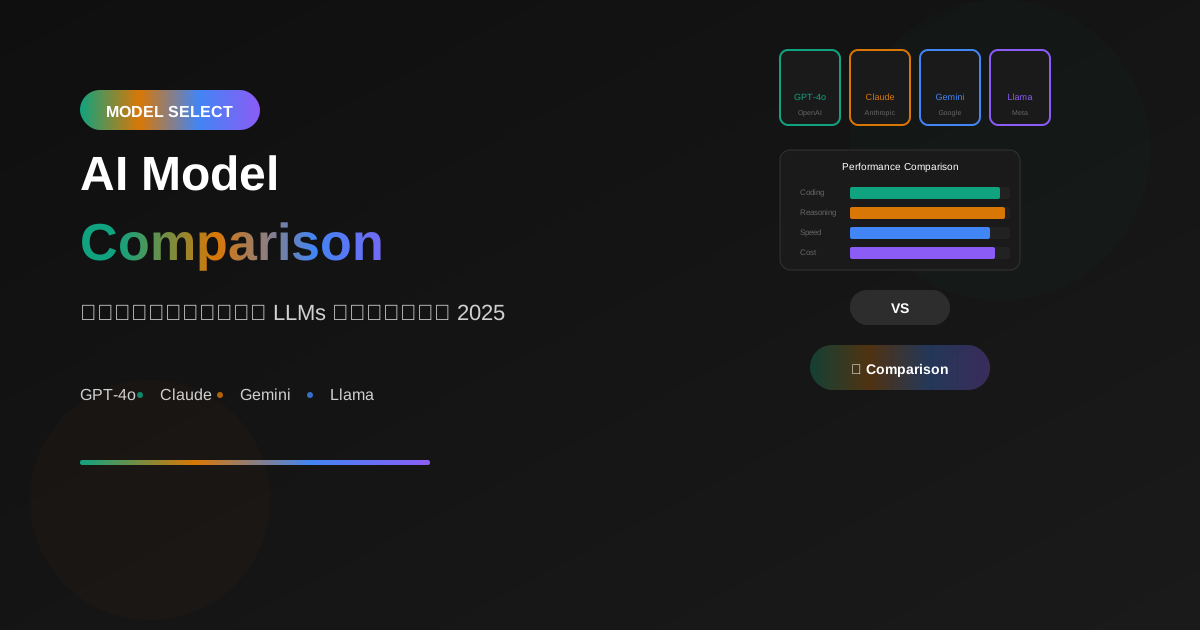
การเลือก AI model ที่เหมาะสมมีผลต่อคุณภาพงานและค่าใช้จ่าย มาเปรียบเทียบ models ยอดนิยมกัน
Overview ของ Major Players
OpenAI
GPT-4o (Flagship)
- Multimodal (text + vision + audio)
- Best overall performance
- $2.50/1M input, $10/1M output

GPT-4o-mini
- Fast และ affordable
- Great for most tasks
- $0.15/1M input, $0.60/1M output

o1 (Reasoning)
- Deep reasoning capability
- Complex problem solving
- Higher cost, slower
Anthropic
Claude Opus 4 (Most Capable)
- Best reasoning
- Long context (200K)
- $15/1M input, $75/1M output

Claude Sonnet 4 (Balanced)
- Great balance of speed/quality
- Good for production
- $3/1M input, $15/1M output

Claude 3.5 Haiku (Fast)
- Fastest response
- Most affordable
- $0.80/1M input, $4/1M output
Gemini 1.5 Pro
- Long context (1M+ tokens)
- Multimodal
- Competitive pricing

Gemini 1.5 Flash
- Fast inference
- Cost-effective
- Good for high-volume
Meta (Open Source)
Llama 3.1 (70B/405B)
- Open source
- Self-hostable
- Free to use

Llama 3.2
- Multimodal support
- Smaller sizes available
- Edge deployment
Comparison Table
Performance
Task                  GPT-4o   Claude   Gemini   Llama
────────────────────────────────────────────────────
Coding               ⭐⭐⭐⭐⭐  ⭐⭐⭐⭐⭐  ⭐⭐⭐⭐   ⭐⭐⭐⭐
Reasoning            ⭐⭐⭐⭐⭐  ⭐⭐⭐⭐⭐  ⭐⭐⭐⭐   ⭐⭐⭐⭐
Creative Writing     ⭐⭐⭐⭐   ⭐⭐⭐⭐⭐  ⭐⭐⭐⭐   ⭐⭐⭐
Math                 ⭐⭐⭐⭐⭐  ⭐⭐⭐⭐   ⭐⭐⭐⭐⭐  ⭐⭐⭐⭐
Long Context         ⭐⭐⭐⭐   ⭐⭐⭐⭐⭐  ⭐⭐⭐⭐⭐  ⭐⭐⭐
Vision               ⭐⭐⭐⭐⭐  ⭐⭐⭐⭐   ⭐⭐⭐⭐⭐  ⭐⭐⭐⭐
Safety               ⭐⭐⭐⭐   ⭐⭐⭐⭐⭐  ⭐⭐⭐⭐   ⭐⭐⭐
Pricing (per 1M tokens)
Model               Input    Output
─────────────────────────────────────
GPT-4o              $2.50    $10.00
GPT-4o-mini         $0.15    $0.60
Claude Opus 4       $15.00   $75.00
Claude Sonnet 4     $3.00    $15.00
Claude 3.5 Haiku    $0.80    $4.00
Gemini 1.5 Pro      $1.25    $5.00
Gemini 1.5 Flash    $0.075   $0.30
Llama 3.1 (hosted)  ~$0.50   ~$1.00
Llama (self-hosted) GPU cost only
Context Length
Model               Context Window
─────────────────────────────────────
GPT-4o              128K tokens
GPT-4o-mini         128K tokens
Claude Opus/Sonnet  200K tokens
Claude Haiku        200K tokens
Gemini 1.5 Pro      2M tokens (!)
Gemini 1.5 Flash    1M tokens
Llama 3.1           128K tokens
Use Case Recommendations
For Coding
Best: GPT-4o, Claude Sonnet 4

Why:
- Strong code understanding
- Good debugging capabilities
- Consistent formatting

Alternative: Llama 3.1 70B (self-hosted)
For Creative Writing
Best: Claude Sonnet 4, Claude Opus 4

Why:
- Natural, engaging writing
- Better at maintaining style
- Understands nuance

Alternative: GPT-4o for versatility
For Analysis & Research
Best: Claude Opus 4, o1

Why:
- Deep reasoning
- Thorough analysis
- Can handle complexity

Alternative: GPT-4o for speed
For High-Volume Production
Best: GPT-4o-mini, Gemini Flash

Why:
- Low cost
- Fast response
- Good enough quality

Alternative: Self-hosted Llama
For Long Documents
Best: Gemini 1.5 Pro, Claude

Why:
- 1M+ context for Gemini
- 200K for Claude
- No chunking needed

Alternative: RAG with smaller models
For Vision Tasks
Best: GPT-4o, Gemini 1.5 Pro

Why:
- Strong image understanding
- Good at details
- Multimodal native

Alternative: Claude for analysis
Choosing the Right Model
Decision Framework
Start with these questions:

1. What's your primary use case?
   - Coding → GPT-4o or Claude
   - Analysis → Claude Opus
   - General → GPT-4o-mini

2. What's your budget?
   - High → Use best models
   - Medium → GPT-4o-mini, Sonnet
   - Low → Gemini Flash, Llama

3. How important is latency?
   - Critical → Haiku, Flash, mini
   - Moderate → Sonnet, GPT-4o
   - Not important → Opus, o1

4. Do you need special capabilities?
   - Long context → Gemini
   - Vision → GPT-4o
   - Safety → Claude
   - Self-host → Llama
By Application Type
Chatbot:
- Production: GPT-4o-mini or Sonnet
- Premium: GPT-4o or Claude Opus

Code Assistant:
- Speed: GPT-4o-mini
- Quality: GPT-4o or Claude

Content Generation:
- Quality: Claude Sonnet
- Volume: Gemini Flash

Document Analysis:
- Short docs: Any model
- Long docs: Gemini or Claude

Research/Analysis:
- Deep: Claude Opus or o1
- Quick: GPT-4o
Multi-Model Strategy
Routing by Complexity
def route_to_model(query, context):
    # Simple queries → cheap model
    if is_simple_query(query):
        return "gpt-4o-mini"

    # Long context → specialized model
    if len(context) > 100000:
        return "gemini-1.5-pro"

    # Complex reasoning → best model
    if requires_reasoning(query):
        return "claude-opus-4"

    # Default
    return "gpt-4o"
Fallback Strategy
async def call_with_fallback(prompt):
    models = [
        "gpt-4o",           # Primary
        "claude-sonnet-4",  # Fallback 1
        "gpt-4o-mini"       # Fallback 2
    ]

    for model in models:
        try:
            return await call_model(model, prompt)
        except Exception as e:
            print(f"{model} failed: {e}")
            continue

    raise Exception("All models failed")
A/B Testing Models
import random

def select_model_ab_test():
    """A/B test different models."""
    variants = {
        "gpt-4o": 0.5,
        "claude-sonnet-4": 0.3,
        "gemini-1.5-pro": 0.2
    }

    r = random.random()
    cumulative = 0

    for model, weight in variants.items():
        cumulative += weight
        if r < cumulative:
            return model

    return "gpt-4o"
Cost Optimization
Tiered Approach
Tier 1: Simple queries
- Model: GPT-4o-mini
- Cost: ~$0.15-0.60/1M tokens

Tier 2: Standard queries
- Model: Claude Sonnet
- Cost: ~$3-15/1M tokens

Tier 3: Complex queries
- Model: GPT-4o or Claude Opus
- Cost: ~$15-75/1M tokens
Cost Calculation
def estimate_cost(prompt, response_tokens, model):
    pricing = {
        "gpt-4o": {"input": 2.50, "output": 10.00},
        "gpt-4o-mini": {"input": 0.15, "output": 0.60},
        "claude-sonnet-4": {"input": 3.00, "output": 15.00},
        "claude-opus-4": {"input": 15.00, "output": 75.00}
    }

    input_tokens = count_tokens(prompt)
    prices = pricing[model]

    input_cost = (input_tokens / 1_000_000) * prices["input"]
    output_cost = (response_tokens / 1_000_000) * prices["output"]

    return input_cost + output_cost
สรุป
Model Recommendations:
| Use Case | Recommended Model |
|---|---|
| General | GPT-4o-mini |
| Coding | GPT-4o, Claude |
| Writing | Claude Sonnet |
| Analysis | Claude Opus |
| High Volume | Gemini Flash |
| Long Context | Gemini 1.5 Pro |
| Self-Host | Llama 3.1 |
Key Takeaways:
- No single "best" model
- Match model to use case
- Consider cost vs quality
- Use multi-model strategies
Remember:
- Test with your actual data
- Monitor performance metrics
- Adjust based on results
- Stay updated on new models
อ่านเพิ่มเติม:
เขียนโดย
AI Unlocked Team
สถาบันสอน AI และ Vibe Coding — เชียงใหม่และออนไลน์
AI Unlocked สอน AI และ Vibe Coding มากว่า 15 ปี ผู้เรียนกว่า 1,500 คน โฟกัสลงมือทำจริงด้วย Claude Code, n8n และ AI Agent
บทความในหัวข้อเดียวกัน
เรียน AI 2026 — Complete Roadmap จากศูนย์ถึงโปร
เรียน AI ปี 2026 ไม่รู้จะเริ่มต้นยังไง? อ่าน Roadmap ฉบับสมบูรณ์นี้ ครบทุก Stage พร้อม Track ตามอาชีพ เริ่มได้เลยวันนี้
28/05/2569

เรียน AI ใน 30 วัน — Plan สำหรับคนงานยุ่ง
เรียน AI 30 วัน ได้จริงไหม? Plan วันละ 1 ชม. สำหรับคนทำงานยุ่ง ตั้งแต่ Foundation ถึง Portfolio — เริ่มต้นได้เลยวันนี้ ดู Pricing
14/08/2569

เรียน AI แล้วเปลี่ยนสายงานได้จริงไหม — Real Case Thai
เรียน AI เปลี่ยนสายงานได้จริงในไทยปี 2026 — 4 case จริง timeline realistic และขั้นตอนที่ทำได้เลย เริ่มต้นที่ AI Unlocked
03/08/2569